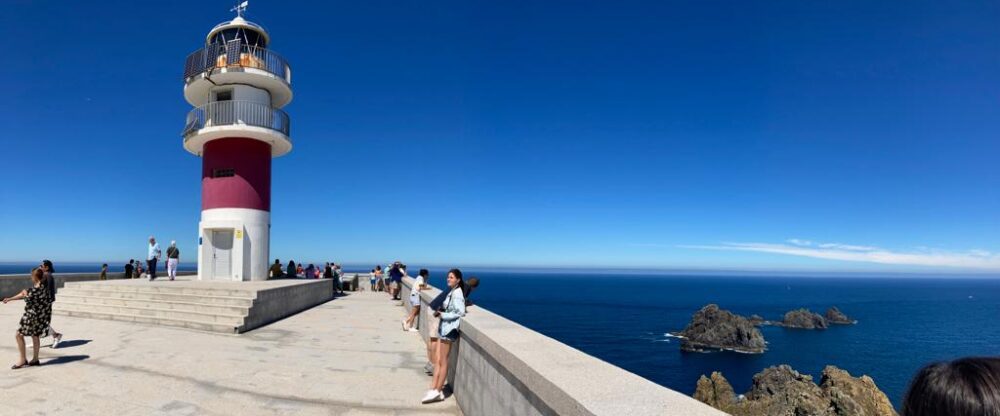
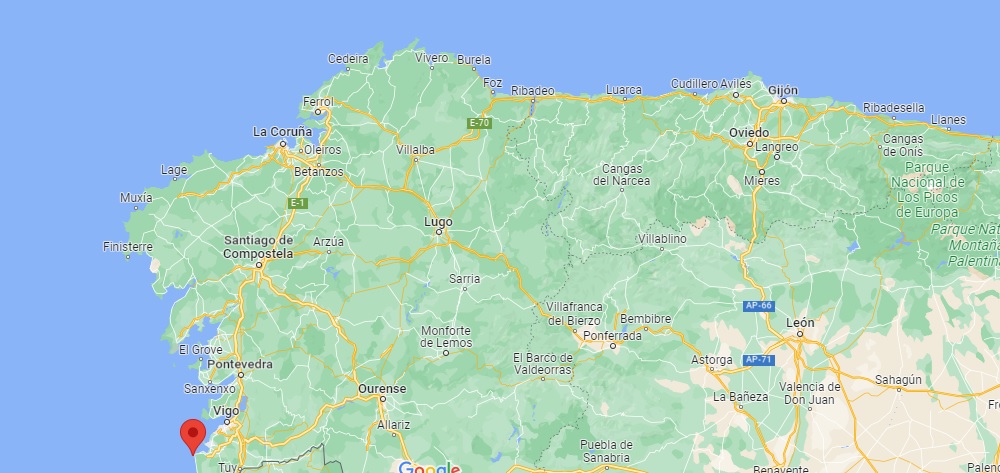
From this cape the Galician Rías Baixas officially begin, which justifies the construction of a fourth-order lighthouse in 1862. With it, the work that both the Monte da Guía lighthouse and the Monte Faro lighthouse had been doing on the islands was complemented. Cíes, both in Vigo territory.
We only conserve the ruins of that first construction, since its location, hardly visible on foggy days, made it necessary to build a second first-rate lighthouse in 1924 with a higher elevation above the sea than the previous one. There is a distance of 800 meters between one and the other and they have both been in operation at the same time.
This event was due to the fact that, although the new lighthouse was inaugurated on August 8, 1924, a serious fire in December of that same year damaged its optics and endangered its two keepers who suffered serious burns, as well as the daughter of one of them who was in the house. For this reason, the old lighthouse, almost at sea level, regained its prominence until July 1925, when it was switched off forever.
The commissioning of the first-order lighthouse changed and notably improved maritime communication, but its main innovation came in 1926 with one of the first radio beacons that made it possible to establish the exact position of ships at sea. This factor was very important both during the Spanish Civil War (1936-1939) and in World War II (1939-1945), being essential until the implementation of satellite positioning.
The J-4 coastal artillery batteries built in the area by the Army in 1943 and which were active until the 1990s speak of its relevance as a strategic location in this war context. Once abandoned, they were only reopened in the year 2002 after the Prestige catastrophe to be able to observe and control the oil slicks from the highest point. Just in front of the lighthouse were the searchlights for lighting the shot and above it, the command and observation bunker.
About 50 people worked on the batteries, with 9 being needed to fire each of the guns. The four artillery pieces with their sentry boxes still stand out from the rocky landscape. The abandoned military facilities are usually quite crowded by lovers of photography but also of mystery. There are many rumors circulating about paranormal phenomena in this place.
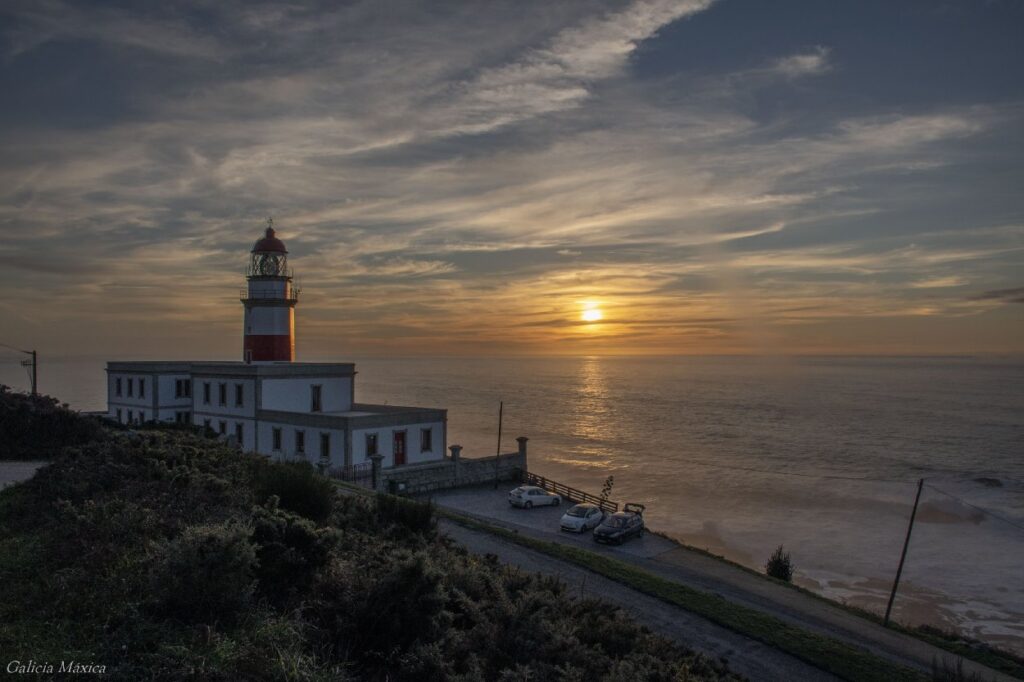
This lighthouse in a unique enclave and with recommendable sunsets will surely captivate you for its aesthetics. In front of the gray of the rocky mount of Baredo emerges the red-and-white lighthouse of Silleiro, which was first built with white walls to be easily located from the sea, but in 1929 it was covered with tiles.
This style was copied from the innovative lighthouse on the island of Sálvora, since both were designed by the engineer Ramón Martínez. The building in Baiona was subsequently reformed by Mauro Serret, who had also designed two of the most important lighthouses in Galicia and of which we have already spoken on previous occasions, the Vilán and Fisterra lighthouses.
The Silleiro lighthouse is considered an emblem for navigation but it was also an important help for aviation. In 1955 an important technological advance was installed that increased its radius of action, allowing it to be identified by planes at a distance of 20 kilometers. Currently, it has a range of 30 miles and is automated. The house of the lighthouse keeper underwent several rehabilitation attempts without any of the proposals coming to fruition.
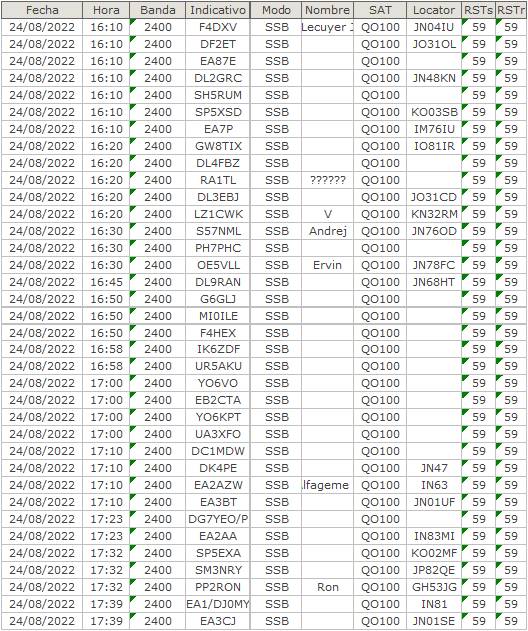
ACTIVATION QO-100 24-08-2022
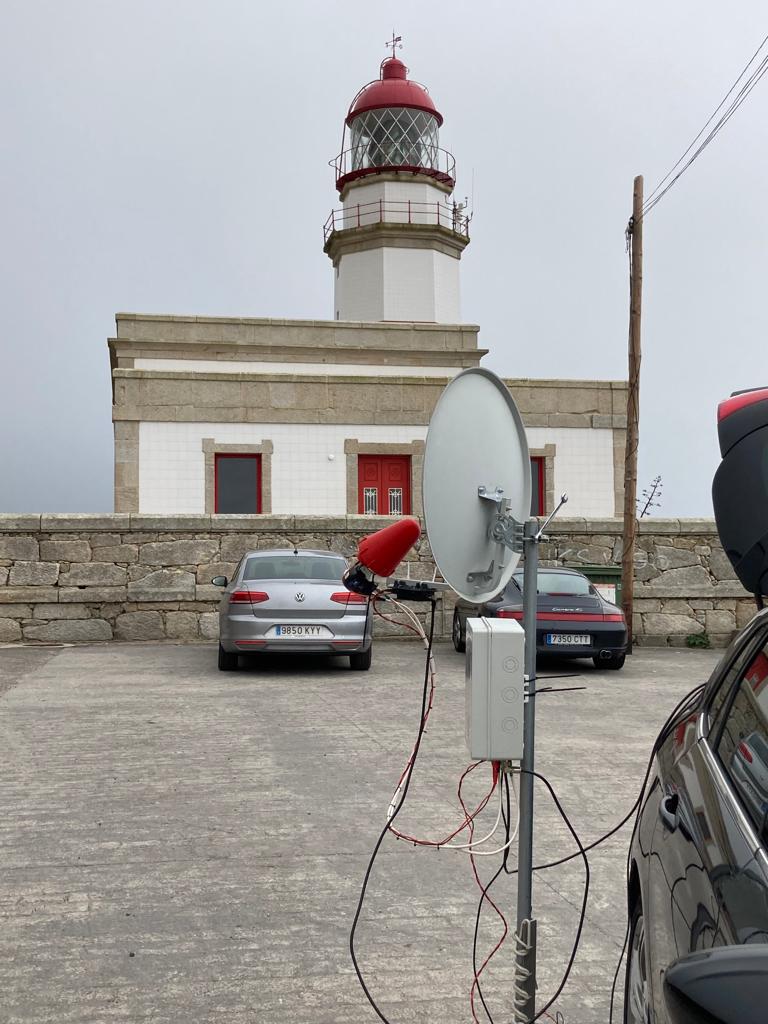
DATA OF LIGHTHOUSE
International Code: D-1916
ARHLS Code:  SPA-047
Description: OCTAGONAL WHITE TOWER RED BANDS AND HOUSE
Height above or ground: 30 meters
Light characteristic: Fl(2+1) W 15s y L 0 4 oc 2 2 L 0 4 oc 5 8 L 0 4 oc 5 8
Period: 15.0
Range: 28 nautical miles
Grid Locator: IN52NC
Coordenates: 43°46′20″N 7°52′05″O