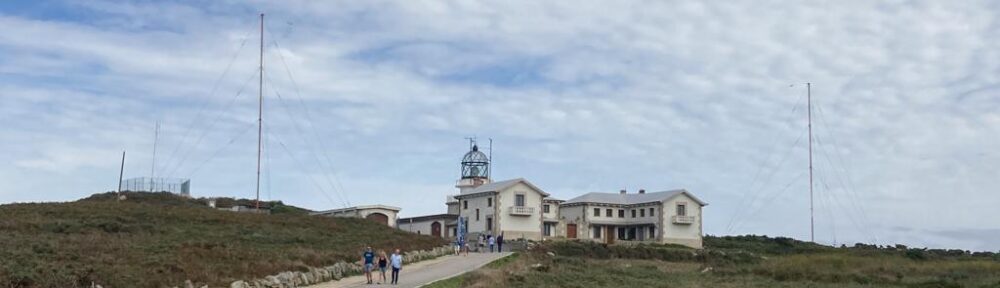
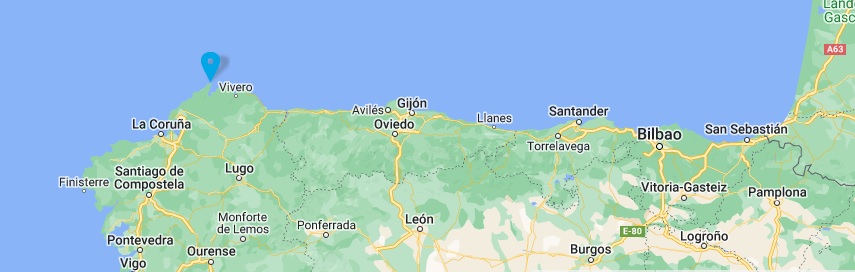
Cabo Ortegal is a very mountainous peninsula located 3 km north of Villa de Cariño, and consists of two points: Punta dos Aguillóns, where the lighthouse is, and Punta do Limo. In the surroundings we will be able to observe a succession of cliffs of about 300m of altitude.
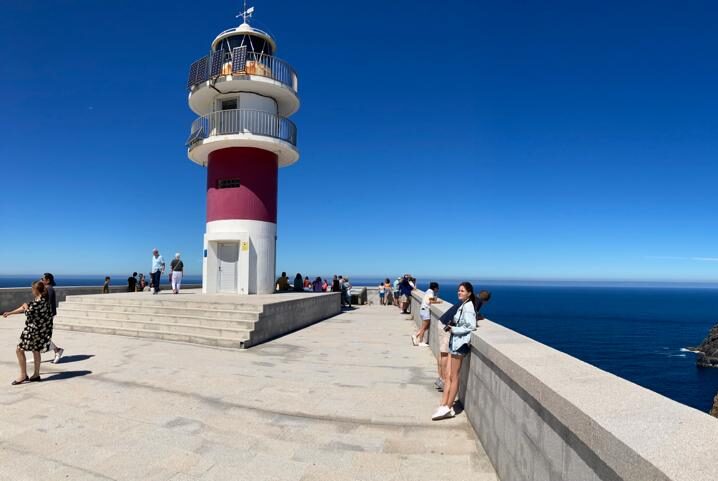
At Punta dos Aguillóns , also called Punta Gallada, the true kilometer zero where the Atlantic Ocean and the Cantabrian Sea meet , and also the western limit of the Bay of Biscay, is the Cabo Ortegal lighthouse (in service since 1983), which rises on a rock at 100m altitude, from where it challenges the bravery of the sea and the wind of this rugged coast. It serves as an observation point for the stones of Os Aguillóns, already named by the Romans as Trileucum or Lapatiancorum Promontorium, which emerge staggered towards the North. Here the best barnacles in Galicia are collected , always beaten by the sea, collected by the barnacles.
To the west we have Punta do Limo , the western limit of Cape Ortegal, where on days of heavy rain we can see the waterfalls of the Limo River , which fall into the sea from a height of 300m. Between Punta dos Aguillóns and Punta do Limo is the Ensenada da Cova, a large arch where curious rock formations such as the “Longa da Moreira” emerge, a vertical rock dozens of meters high that ends in a peak. The sunsets in Summer in front of Punta do Limo will not leave anyone indifferent.
The peninsula of Cabo Ortegal is included within the ZEPVN (Zone of Special Protection of Natural Values) «Costa Ártabra» , which covers a coastal section of the province of A Coruña corresponding to the region of Ferrol and a part of the Ortegal.
The ZEPVN Costa Ártabra is characterized by its scenic beauty. In it, a corner such as Cabo Ortegal stands out, which stands out for its geological, floristic and faunal singularity. Among the habitats protected by the Natura 2000 Network, present in this area of Cabo Ortegal, is the Cliff Habitat with vegetation from the Atlantic and Baltic coasts.
Coastal cliffs constitute a habitat with particularly difficult characteristics for the development of plant communities. The physical conditions in these environments are highly variable, depending on the slope of the land, splashes from the sea, the action of the wind and exposure to the sun. The first beings capable of colonizing bare rocks are lichens. The presence of lichens will be important to prepare these environments for the growth of pioneer plants such as bryophytes (non-vascular plants that include , liverworts and hornworts), which together with the materials from the decomposition of the rock, produce a small accumulation of sediments that are retained in the cracks. These primitive soils are used for the development of larger plants.
The rocks that form the Cabo Ortegal Complex have a metamorphic origin, and the presence of Amphibolites, Eclogites, Granulites, Gneises and serpentinized ultrabasic rocks stand out for their importance.
All this set of geological and natural values existing in this enclave make it one of the main tourist spots on the Iberian Peninsula .
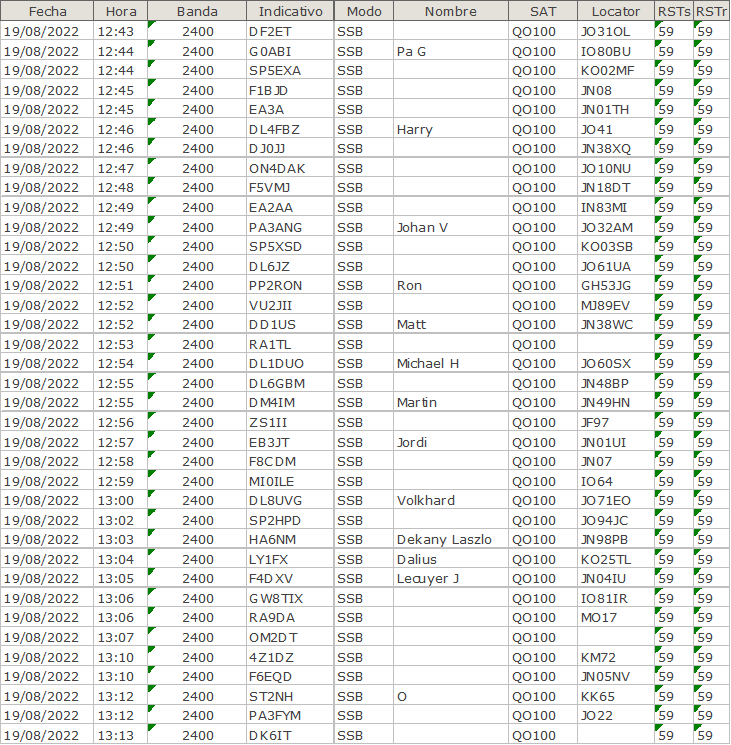
QO-100 ACTIVATION 19-08-2022
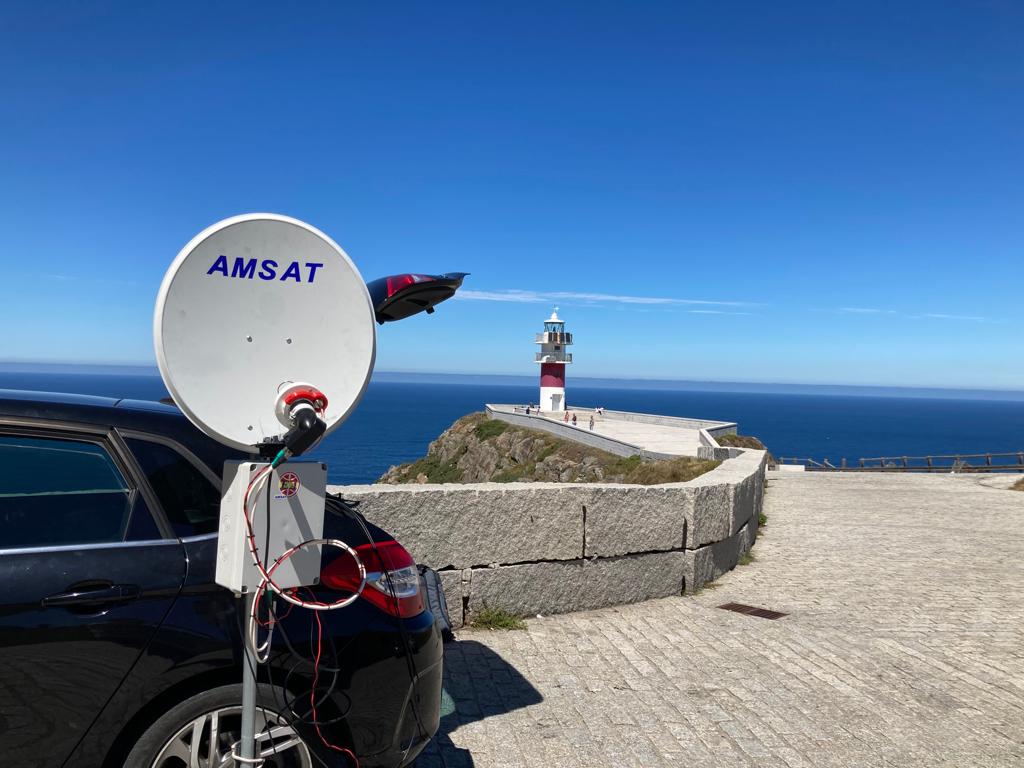
Data of Lighthouse
International Code: D-1686.3
ARLHS Code:  SPA-036
Description: cylindrical concrete tower
Height above or ground: 10 meters
Light characteristic: OcB 8s
Period: 6+<2>=8
Range: 18 nautical miles
Grid Locator: IN53BS
Coordenates: 43°46′20″N 7°52′05″O