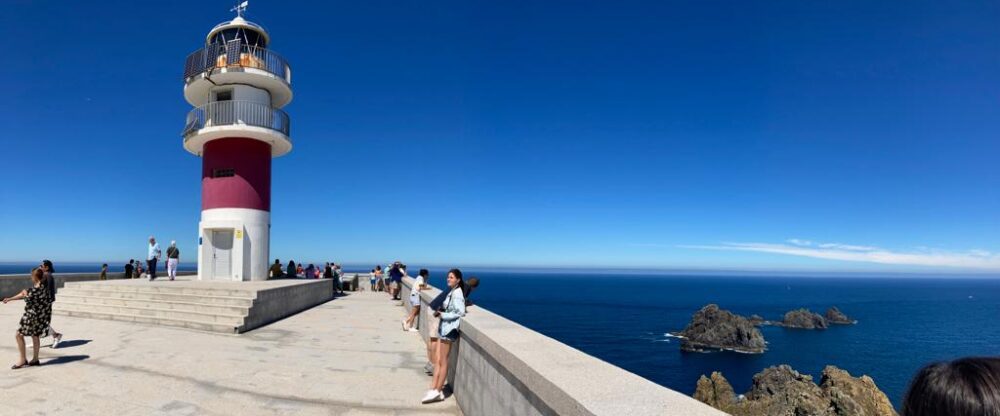
After touring the entire Costa da Morte, from Finisterre to Malpica, following the route of the lighthouses, we arrived at Corme, a small coastal town. Continuing along the road we arrive at Punta Roncudo, where the Roncudo Lighthouse is located, named for the noise that the sea makes when it breaks on its cliffs, and like all lighthouses, its mission is to alert ships to the presence of the coast. next. But what the Roncudo Lighthouse is famous for, apart from the beauty of its natural environment, is the famous Roncudo barnacles. The force of the sea in this area and the characteristics of its waters mean that the barnacle from this area is considered the tastiest in Galicia, a corner worth visiting.
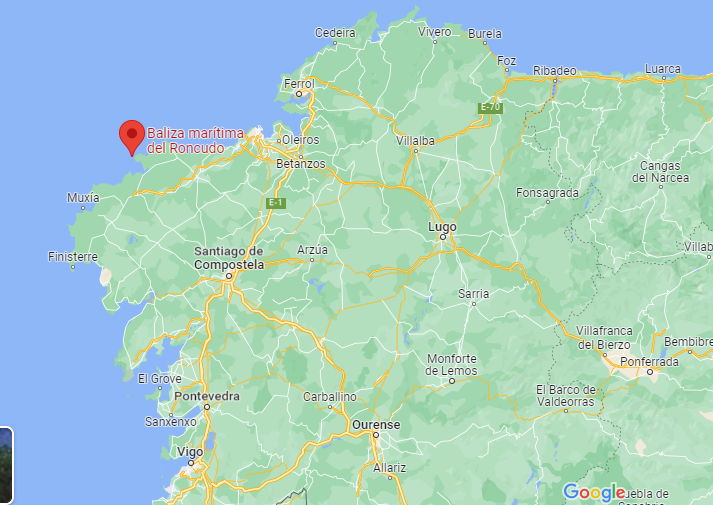
A short distance from the population center of Corme is Punta do Roncudo, which owes its name to the hoarse roar produced by the waves crashing against the rocks of the cliffs.
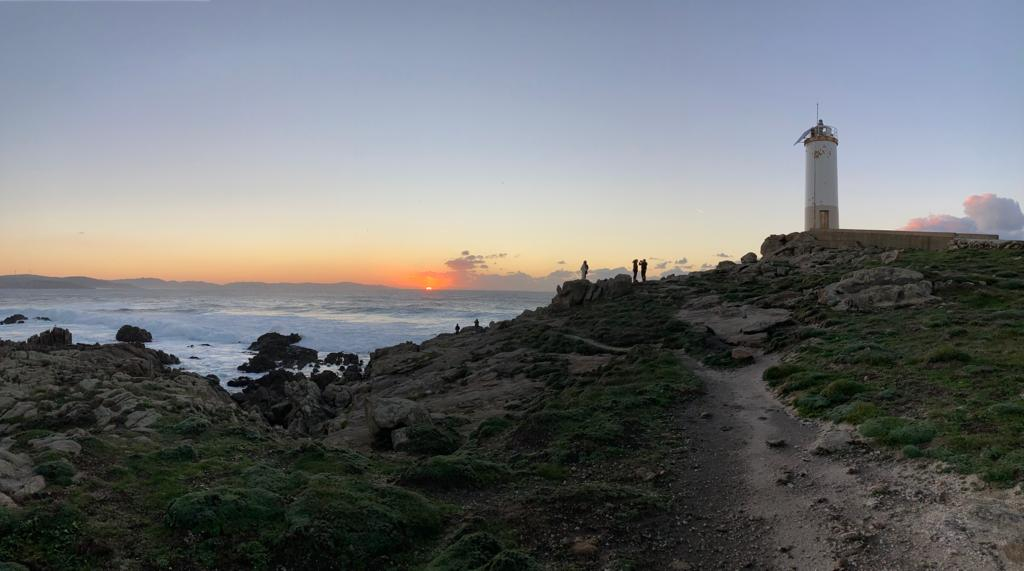
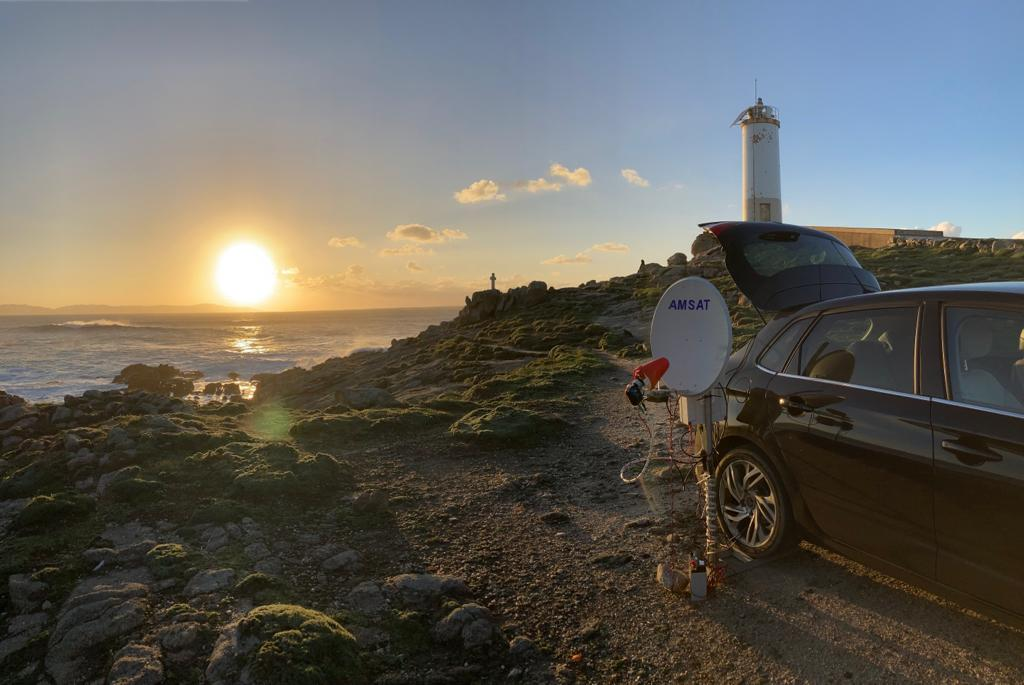
In this wild environment, surrounded by granite stones and wild sea, stands the FARO DO RONCUDO, commissioned to the engineer Francisco Godínez.
It started operating in 1920, marking the mouth of the estuary along with its twin, the FARO DE LAXE.
It is made up of a single cylindrical tower without an annex building, about eleven meters high with internal stairs and a lantern.
The passage of boats in front of this promontory is a risky manoeuvre, despite the presence of the lighthouse that guides them on their journey through these treacherous waters, it is here where many ships that sailed through these waters ended their days and were unable to of surviving the Costa da Morte, turning this point into a cemetery for dozens of shipwrecks, like the Austrian ship Óscar in 1899; the Gladiator fishing boat in 1907; the Greek coal miner Anastasis in 1919; the Genoese merchant ship Padova, on February 4, 1923; the cormelan Benigno Díaz in 1960; the Ortigueira Nalda-Mar fishing boat, on November 24, 1972; the Corme Liraña fishing boat on 2-10-1973; the Galician fishing assistant Nueva Elvira in 1978; the Nueva Elvira in 1990 and the Corme Siempre Perales fishing boat that same year, events that splashed the doors of the houses of some neighbors with pain and made the people dress in mourning, while the church bells did not stop ringing.
As they say, many of those shipwrecks gave names to the stones that surround the lighthouse. Like the Petón do Millo, so named because a ship loaded with corn sank there and fed the entire population for months.
But also, the force of the sea and the characteristics of the waters that beat the rocks of these cliffs, give us, for their flavor and size, with the best, tastiest and most appreciated BARNACLES in the world. Its difficult capture of the «king of the sea and shellfish», carried out by the exposed percebeir@s, in most cases in extreme conditions, is severely regulated so as not to deplete a resource that feeds many families in the Shire.
There are many who lost their lives trying to collect this appreciated delicacy. The moving CRUCES DA RIBEIRA rest there in his memory.
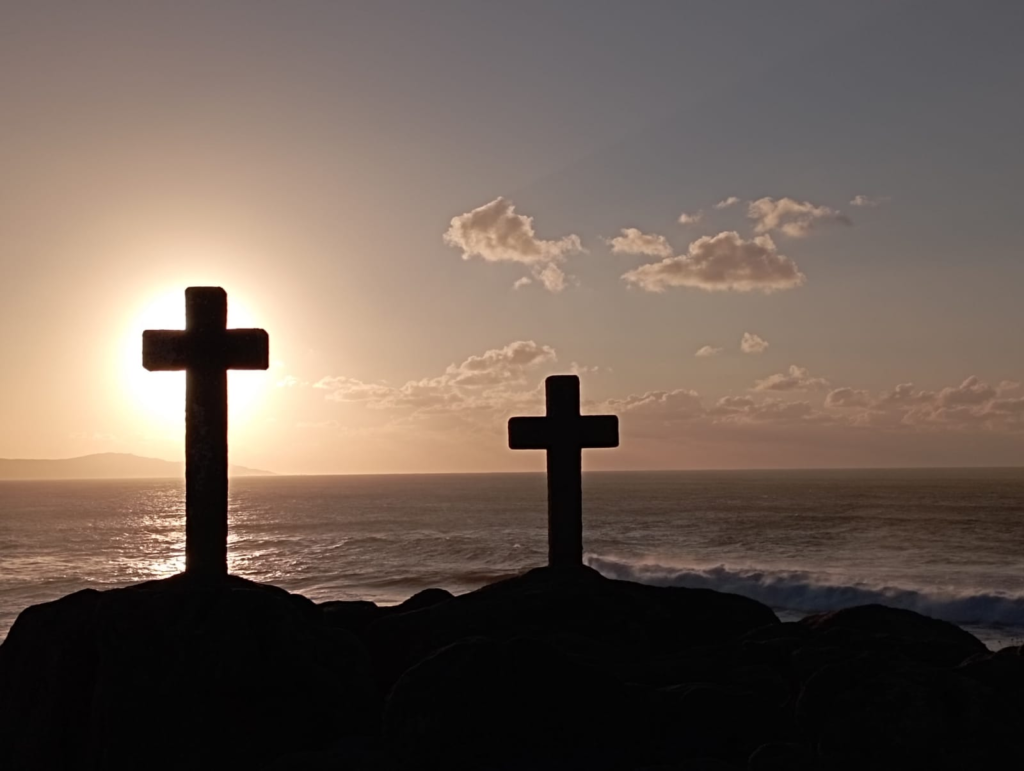
Three stone crosses in memory of Uncle Poliño, of one of his sons, and another, the most recent, of José de Carabel, who died in the presence of his wife, Rosa Sinto, when he was pulling barnacles from the cliff. A tribute to all those who disappeared in this indomitable sea and who remind us why the barnacle is expensive. Their widows or descendants continue to care for them.
Beneath the crosses is the rock that resembles the face of a Basque sailor, evoking the numerous and almost hundred-year-old Cormelana colony in Trintxerpe, Pasaia neighborhood, in Guipúzcoa.
Since 1992, the FESTA-EXALTACIÓN DO PERCEBE DO RONCUDO has been celebrated on the first Saturday of July, this product that makes Corme a place known throughout the world. Throughout the month the barnacles work on the stones so that on Saturday, the town of Corme is taken over by people from all over Galicia in search of this precious delicacy. It is the largest gastronomic festival in the province of A Coruña.
On the north face of the point we will see the POZO DE CORME, a natural pool in the wildest part of the Costa da Morte and which must be accessed with great care.
It drinks the waters of the Atlantic, it is circular, deep and the sand at the bottom is fine and clear.
The water is turquoise, and limpets, anemones, mussels and barnacles can be seen if the cold does not chill your bones first.
In this wild and incredibly fantastic environment, full of granite rocks eroded by the wind, it shelters a wealth of fauna and botany typical of coastal and cliff habitats.
And how could it be otherwise, from here there are also excellent panoramic views of the Corme and Laxe estuary, of the town of Laxe which is located just opposite, of the lands of Camelle and Arou (Camariñas), and of the points that form the Veo and Tosto capes, complementing this wonderful natural space.
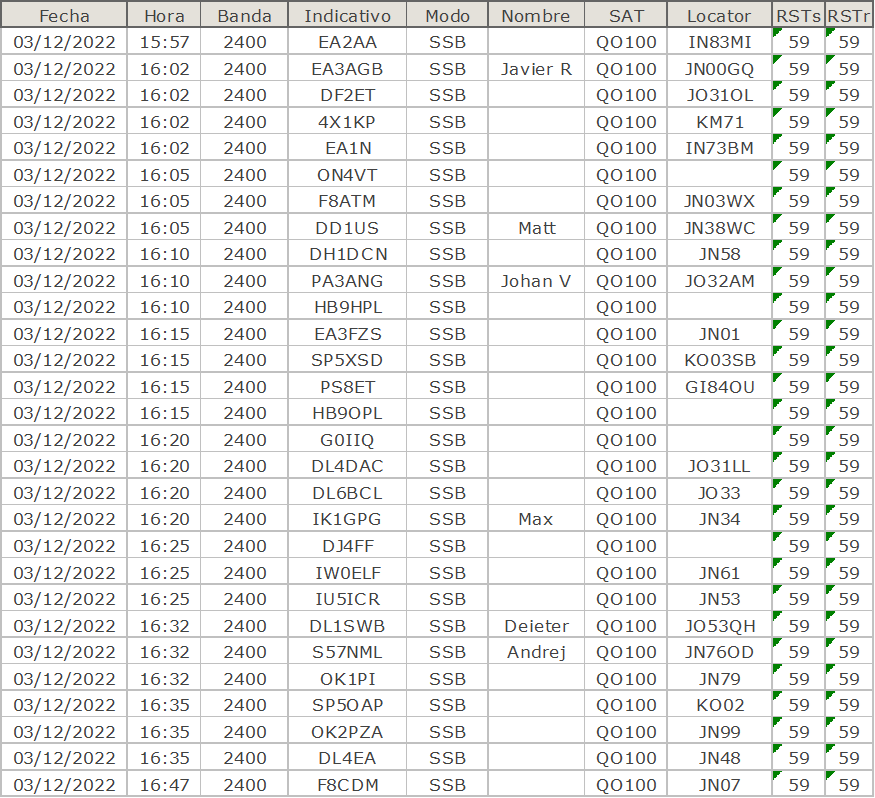
ACTIVATION QO100 03-12-2022
DATA OF LIGHTHOUSE
International Code: D-1730
ARHLS Code:  SPA-228
Height above or ground: 38 meters
Light characteristic: 	D 6s L1 Oc5
Period:  12
Range: 22 nautical miles
Grid Locator: IN53MG
Coordenates: 43º 16' 29.5" N - 8º 59' 26.5" W
LINKS
https://www.turismo.gal/recurso/-/detalle/36826/punta-roncudo?langId=es_ES&tp=9&ctre=44#
http://www.caminodosfaros.com/faro-roncudo/
http://www.caminodosfaros.com/fiestas/festa-do-percebe-corme/
http://www.caminosdomar.com/info.php?id=27&idioma=es&sec=2
https://guias.masmar.net/index.php/Faros/Coru%C3%B1a/03750-Faro-de-Punta-Roncudo
https://www.acostadamorte.info/ponteceso.html
http://www.finisterrae.org/info.php?informacion=39&idioma=es&sec=6